Reimagined Rigaud
Founded in 1852, Rigaud is often credited as one of the earliest houses to transform fragrance from a personal ritual into an experience for the home. Long before scented candles became part of everyday life, Rigaud introduced the idea that a space could hold a scent, a mood, and ultimately, a memory.
While researching the brand's history, I became fascinated by a simple question:
If Rigaud were introduced for the very first time today, what would its visual language look like?
Rather than moving away from the brand's heritage, this concept explores a return to its origins through the landscape and craftsmanship of Grasse, the birthplace of modern perfumery.
Morning Dew
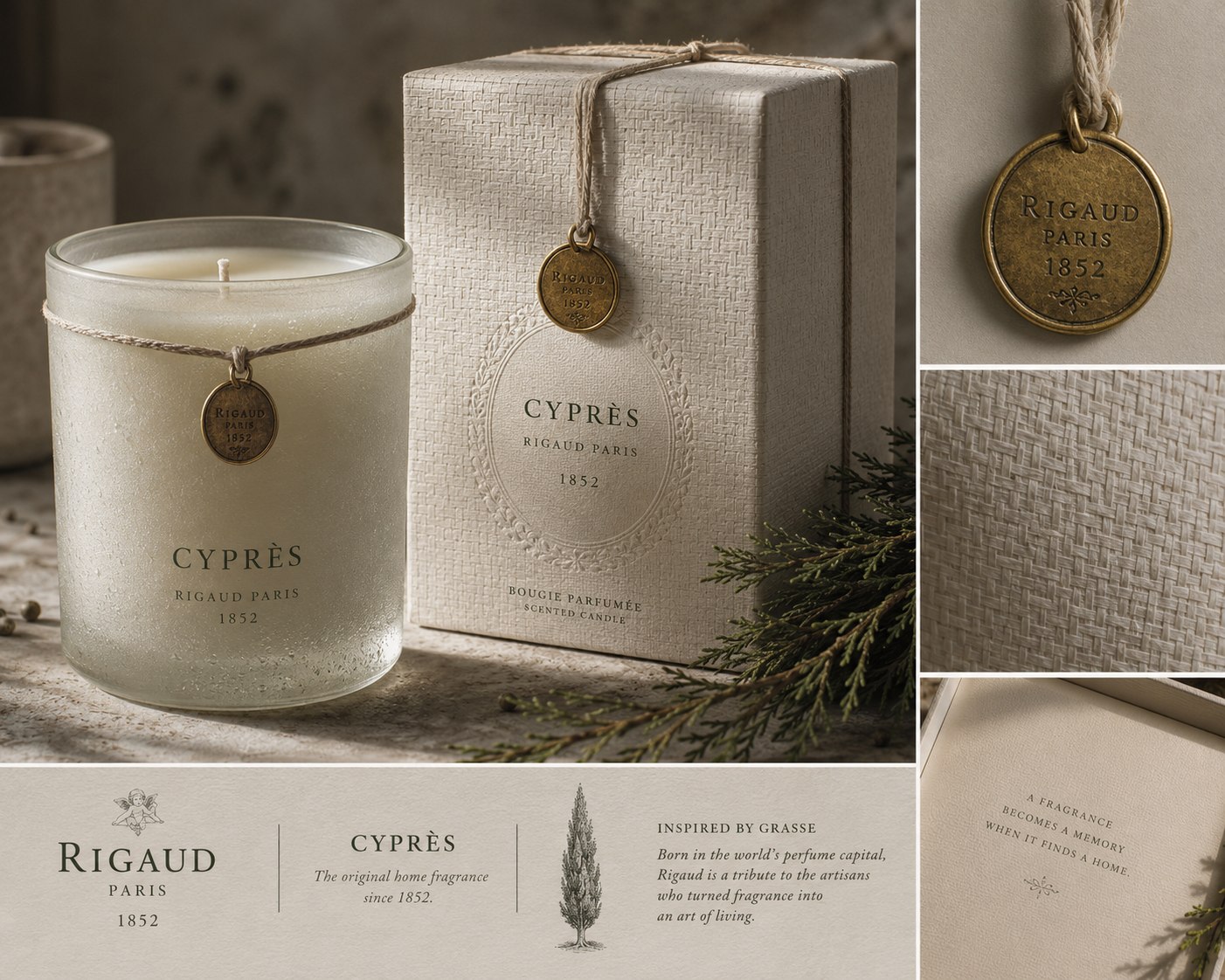
The candle vessel is inspired by the early mornings of Grasse. Before the fields awaken and before flowers are collected, a delicate layer of dew settles across the landscape. The frosted glass reflects this fleeting moment, creating a soft and almost ethereal appearance that changes with the light. Rather than showcasing ingredients directly, the vessel captures the atmosphere of the region where fragrance begins.
The Flower Gatherer's Basket
The packaging draws inspiration from the woven baskets historically used to collect jasmine, rose centifolia, and other flowers grown around Grasse. For generations, these baskets were part of the daily rhythm of the perfume harvest. Instead of illustrating flowers, the concept references the craftsmanship behind them through a subtle embossed texture wrapping the entire box. The result is tactile rather than decorative, inviting the customer to experience the story through touch.
The Medallion
During the research process, archival Rigaud perfume bottles revealed a recurring detail: a small hanging medallion attached to the vessel. This element became the foundation for a contemporary reinterpretation. The medallion is imagined in a warm, aged copper finish inspired by the traditional copper alembics used throughout the history of perfumery for distillation and extraction. More than an ornament, it functions as a mark of origin — a quiet tribute to the artisans, workshops, and techniques that helped shape the world of fragrance.
From Notes to Memories
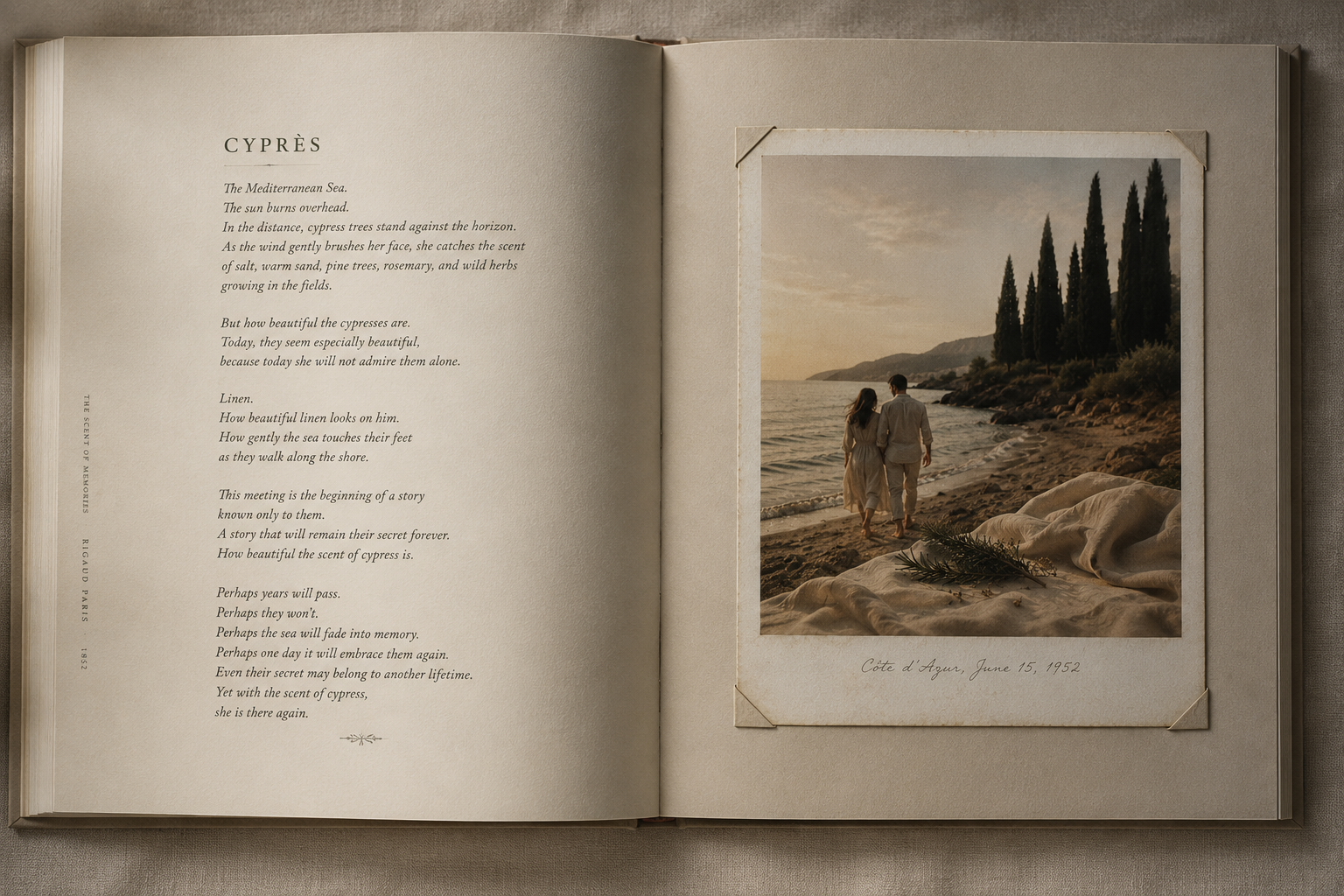
The project also proposes a shift in the way fragrance is communicated. Most candles describe ingredients. This concept explores memories instead. Because fragrance is rarely remembered for what it contains. It is remembered for where it takes us. This idea evolved into The Scent of Memories, a collectible book accompanying the collection. Each fragrance is paired with a story inspired by a place, a moment, or a feeling rather than a list of notes. For Cyprès, the fragrance becomes a Mediterranean memory:
salt carried by the wind,
linen moving in the sunlight,
the gentle touch of water against bare feet,
and a secret shared between two people.
Years may pass. Yet one breath of cypress brings the moment back.
A Contemporary Tribute
This concept is not a redesign of Rigaud. It is a creative exploration of how one of the earliest pioneers of home fragrance might speak to a contemporary audience while remaining deeply connected to its heritage. Through dew, woven baskets, copper alembics, and memory, the project seeks to reconnect the brand with the landscape, craftsmanship, and emotion that have always been at the heart of perfumery.